
TraderShow Workshops: Practical Chart Reading and Trading Psychology
TraderShow is the practical workshop track of the 4Invest Free Trading School. While other courses teach structured concepts, this course focuses on applying those concepts to chart-reading, trade filtering, technical tools, and trading psychology.…
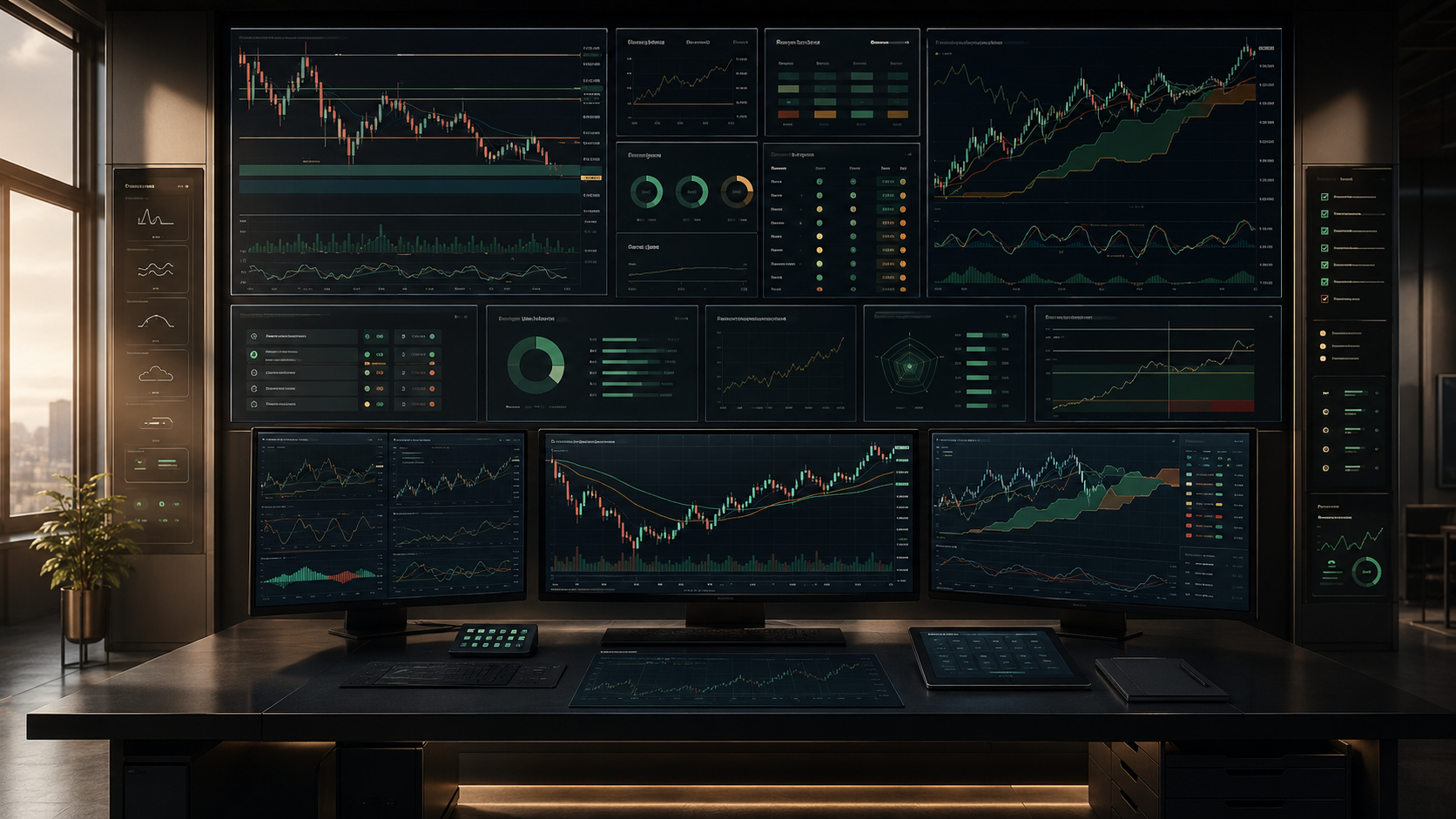
TraderShow is the practical workshop track of the 4Invest Free Trading School. While other courses teach structured concepts, this course focuses on applying those concepts to chart-reading, trade filtering, technical tools, and trading psychology.
The course begins by introducing a practical trading workflow. Students learn that trading is not one tool or one signal. A professional workflow includes market context, trend, levels, momentum, confirmation, risk planning, and psychological control.
Students then study pivot concepts as market reference levels. Pivots are used as decision zones, not automatic signals. The course continues into trend-analysis workshops, helping students separate trend direction, pullbacks, major trends, minor trends, and multi-timeframe context.
Moving averages are revisited as trend filters. Volume, RSI, and MACD are combined in practical examples to evaluate momentum, confirmation, divergence, and weakening market behavior. Students learn how to interpret indicators together without overcomplicating the chart.
A major part of the course is trading psychology. The lesson on emotional excitement and trade management teaches students how FOMO, revenge trading, overconfidence, and impulsive execution can damage results even when technical analysis is correct.
The course then moves into Fibonacci PRZ workshops, oscillator workshops, price patterns with oscillator confirmation, Fibonacci practice, time and Ichimoku workshops, and final trade filtering.
The final lesson, Filtering and Trade Selection, is one of the most important lessons in the entire school. It teaches students that professional trading is not about taking more trades. It is about rejecting weak setups and waiting for higher-quality conditions.
What students will learn
- How to apply chart-reading concepts in practice
- How to use pivot levels as reference zones
- How to separate major and minor trend movement
- How to combine moving averages, volume, RSI, and MACD
- How emotional excitement damages execution
- How to practice Fibonacci, PRZ, oscillators, and Ichimoku timing
- How to filter weak setups and build a trade checklist
- Why non-entry is a professional trading skill
Risk note: Practical chart analysis can improve preparation, but it cannot guarantee profitable trades. This course is educational only and does not provide financial advice or signals.
This course should feel like a serious trading lab. The atmosphere is practical, applied, and discipline-focused. Students are not just learning definitions; they are practicing how to combine tools on real charts.
The philosophy is “better trades, not more trades.” Students learn that practical trading requires filtering, emotional control, confirmation, and the ability to reject low-quality setups.
By the end of this course, students should be able to apply technical tools in a practical chart-reading workflow, combine trend, pivots, indicators, Fibonacci, oscillators, Ichimoku, and psychology, and build a trade-filtering checklist to reduce emotional and low-quality decisions.
Course Lessons
Start the TraderShow workshop series by understanding how practical chart analysis connects market structure, tools, psychology, and trade filtering.
Learn pivot concepts as practical market reference levels for reaction zones, intraday structure, and decision-making.
Practice trend analysis by identifying direction, pullbacks, trendline quality, continuation behavior, and trend weakness.
Learn how to separate major trend direction from minor internal movement and avoid confusing pullbacks with reversals.
Use moving averages as practical trend filters while understanding their limitations in ranges and choppy markets.
Practice combining volume, RSI, and MACD to evaluate momentum, confirmation, divergence, and weakening trend behavior.
Study trading psychology, emotional excitement, impulsive entries, revenge trading, overconfidence, and structured trade management.
Practice identifying Fibonacci PRZ zones and combining them with confirmation, structure, and risk planning.
Learn how oscillators help evaluate momentum, overextension, divergence, and market condition.
Combine classic price patterns with oscillator confirmation to improve context, avoid weak signals, and plan trades more carefully.
Practice Fibonacci basics in a workshop format by measuring swing moves, pullbacks, projections, and reaction zones.
Practice Ichimoku and timing analysis to understand trend context, cloud behavior, rhythm, and future decision zones.Practice Ichimoku and timing analysis to understand trend context, cloud behavior, rhythm, and future decision zones.
Learn how to filter weak setups, qualify better trades, avoid overtrading, and build a professional decision checklist.