A professional dashboard is not just a design feature. It is a control layer.
In capital management, clients need more than a balance number. They need context. They need to understand what is available, what is locked, what changed, what is pending, what was paid, and where to find support if something is unclear.
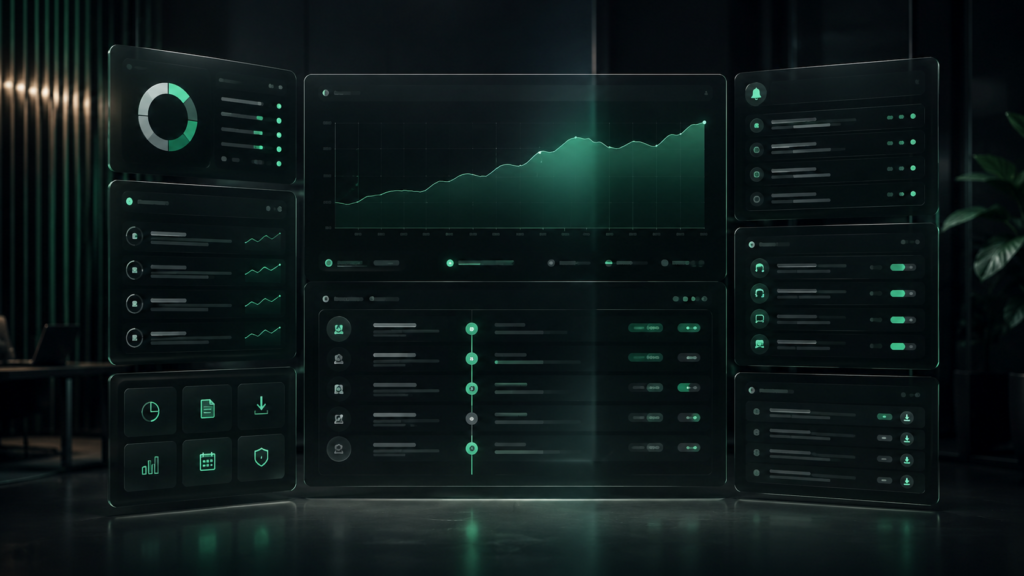
For 4Invest, the dashboard is designed to connect several operational layers:
- balance overview
- deposit invoices
- withdrawal requests
- locked balance explanations
- transaction center
- CSV statement export
- printable account statement
- notification center
- support tickets
- referral records
This matters because transparency reduces uncertainty. If a client submits a withdrawal, the dashboard should show why funds become locked. If support replies to a ticket, the client should see the thread. If a deposit is created, the client should see network warnings and payment details. If an account statement is needed, the client should be able to export it.
Reporting is part of risk management because unclear information creates operational risk. Users make mistakes when systems are vague. They send funds to the wrong network, misunderstand pending status, or cannot find transaction records.
A serious platform should reduce those mistakes by design.
For 4Invest, the dashboard also supports brand trust. The platform is not asking users to rely only on marketing language. It gives them records. It gives them visibility. It gives them a support path. It makes financial activity easier to review.
This is important in any capital-management environment, but especially in digital-asset workflows where transfers can be irreversible and transaction identifiers matter.
The dashboard should therefore be treated as part of the operating system, not as a decoration. It is where risk communication, client service, and account reporting meet.
Trust is easier to build when users can see the process.
Risk note: Dashboard reporting improves transparency, but it does not remove market, operational, or blockchain risk. This article is educational and does not represent financial advice.